To begin, how would you describe your role as Chief Operating Officer (COO) in a nutshell, and what does a typical day look like for Aspect’s COO?
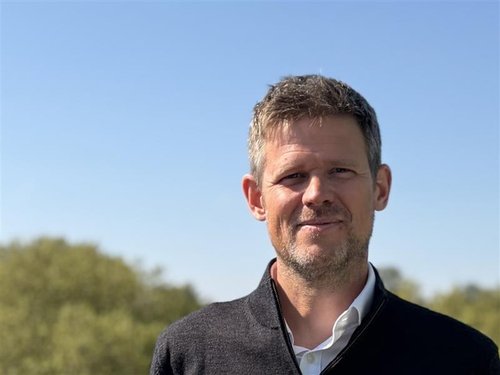
As a quantitative, systematic investment firm, the engine of Aspect’s business is our Research and Development teams, who are responsible for our investment models which drive performance. I think of the role of the COO as being to ensure that those teams can operate free from distractions and can concentrate on generating investment returns for our clients. So, it’s my job to ensure that the firm’s entire operating platform is robust and scalable, to support the work that adds real value for our clients.
It’s a bit of a cliché, but there really is no such thing as a “typical day” in my role. The core elements tend to revolve around people management, responding to things that come up on an ad-hoc basis, and time spent on longer-term, strategic projects. However, the specific details of those things, and the mix of time spent between them, is an ever-changing feast. That’s one of the things I enjoy most, the fact that there’s always something new to get my teeth into and that no two days are the same.
You originally joined Aspect as a lawyer more than 15 years ago and have since taken on a variety of roles. Could you walk us through that journey and how each chapter has shaped who you are today?
I joined from a City law firm in mid-2010 as a junior member of Aspect’s legal team, as I wanted to experience life on the other side as an “in house” lawyer. I enjoyed the variety and challenge of the role, and the fact that I felt closer to the commercial decisions driving the legal work I was being asked to do. Towards the end of 2012, as the alternative investment industry faced a tidal wave of new regulation in the aftermath of the Global Financial Crisis, my role became more specialised and I was focused on monitoring upcoming regulatory changes and implementing Aspect’s response to them. That gave me meaningful responsibility and exposure to key stakeholders within the business at a relatively early stage of my career. However, I always felt my future lay away from purely legal work.
In 2015 I was fortunate to be presented with an opportunity to take my career in a different direction, and I became involved in helping the firm diversify its revenue streams through the onboarding of new investment capabilities and the development of new products. By mid-2017, my role evolved into a more client-facing one within our Business Development team. I was overseeing our Investor Relations and Marketing functions, as well as taking responsibility for co-ordinating all client-related strategic projects. In addition to being my first foray into managing people, the key experience from this phase of my career was understanding the importance of first-class client service, based on transparency, trust and partnership – something that Aspect prides itself on.
This role also gave me regular exposure to the key operational functions in the business, which meant I was well-placed to step into the role of Deputy COO in early-2025, before transitioning into the COO role itself. With this being such a broad role, it’s key to be able to assimilate new information quickly, to accept not having perfect knowledge of everything and to back your own judgment. Communication is key here, and I ensure I’m in regular dialogue with my teams and other key stakeholders within the firm.
I consider myself very lucky to have had such a varied and interesting journey during my career at Aspect. Hopefully, the broad range of experiences I have accumulated over the years allows me to consider a problem from all angles and to strike an appropriate balance between competing considerations when deciding on a course of action.
Looking back across that progression, what do you feel has been most important in helping you grow?
Undoubtedly, Aspect’s open and collaborative culture has been a key factor in facilitating my journey. The people who work here are smart, rigorous and intellectually curious, with considerable expertise in their respective domains, but there are no egos; everyone is generous with their time and is pulling in the same direction. This makes it easy to ask questions, which is crucial for personal growth. No matter what role I have been in during my time here, I have always been able to approach anyone in the firm to ask questions, talk through a particular issue or seek advice.
I have also been fortunate to have had exceptional managers, with whom I have been able to maintain an open and honest dialogue about my career aspirations throughout my time at Aspect. I think it’s vital for both the employee and the employer to have that dialogue, as it enables any issues or concerns to be addressed early on and allows both sides to plan for the future with confidence. I certainly feel that having such a level of trust and transparency with my managers has been key to getting the most out of my career to date.
You’ve led many significant projects during your time here. Is there one that stands out as especially defining or memorable, and what made it so impactful?
I’d say the most fulfilling project was leading the establishment of our business in China. This was a strategically important, complex, multi-faceted initiative which represented an incredible opportunity for me personally to roll my sleeves up and get stuck into something completely new.
Although we had been operating in China through a partnership with an onshore firm since 2016, and had been researching Chinese futures markets for a number of years even before that, the concept of establishing a physical presence in China represented a step-change in our approach. We started with literally a blank piece of paper – no staff, no office and no experience of dealing directly with Chinese regulators – and within 18 months we had a fully-functioning office in Shanghai with five employees and – importantly – approval from the regulator to begin trading and raising assets. This was thanks to an incredible, business-wide effort from our teams both here in London and in Shanghai. It was a steep learning curve, and stressful at times, but it really showed Aspect’s values in action, including our collegiate approach and love of a challenge.
The thesis behind the strategic decision to establish a presence in China was that we could leverage the experience of applying our investment strategies to Chinese futures markets, a differentiated product and our international reputation and brand-name to raise material assets from onshore Chinese investors and thus create new, diversifying revenue streams for the global business. I’m delighted to say that the experience we have had so far has fully validated this decision, as we have seen rapid growth within our Chinese business.
As your responsibilities have grown and your role has come to span almost every part of the business, how has your leadership style evolved?
I firmly believe that if you hire smart, motivated, diligent people and give them autonomy to do their jobs within a clearly-defined framework, then you’ll get good results. I’m lucky that the people we hire at Aspect tick all of those boxes, so I try to focus on making sure the parameters of their roles are clearly-defined, that they have a full understanding of the wider business dynamics and priorities, and then ensure I’m available to act as a sounding board or offer the benefit of my experience as needed. I don’t think it’s realistic, or in anyone’s interests, for me to be in the detail of everything that is going on at any time across the teams I have responsibility for.
A lot of it comes down to trust: trust that we can hire and retain good people, trust that they have all of the information needed to back their judgment, and trust that they will come to me if needed. This is backed-up by regular communication to ensure I have an overview of everything that I need to know about and that people have the opportunity to raise any issues they may need to.
How do you build strong relationships across such a diverse range of teams?
I find that often, one of the things that people value most is the sense they’re being listened to. If people feel like their point of view has been genuinely taken on board and considered in any decision-making process, then they are likely to be more disposed to accept whatever decision has been made, even if it doesn’t align with what they may have wanted. So when it comes to the interactions I have with other teams and individuals across the business, my starting point is to really try to listen and understand their point of view before anything else. Then, once a decision has been made which affects them, it’s important that they have full visibility of how that was arrived at and the extent to which their point of view was taken into account. I guess that’s a long way of saying that communication is key to building trust, which is key to building relationships - but it’s vital that it’s a two-way process.
And finally, for those at earlier stages of their careers, what guidance would you offer based on your own experience?
Be curious, communicate openly and never overlook an opportunity to expand your skillset.